# Studio Automation
Architecture and implementation guide for the automated, single-tap studio power sequencing and wireless RF control system orchestrated by **`pikvm-studio`**, **Great Scott Gadgets Yard Stick One (Sub-GHz SDR)**, and **Authentik SSO**.
---
## 1. System Overview & Architecture
The goal of this system is turn on the studio with a button push and automatically start recording.
```text
[Mobile Phone]
│ (HTTPS Request)
▼
[Nginx + Authentik SSO]
│
▼
[pikvm-studio Appliance]
├──► [Yard Stick One USB] ──► 433.92 MHz RF Bursts (Outboard Gear & Monitors)
└──► [PiKVM ATX Header] ──► Physical Motherboard Power Relay (bmo95 Workstation)
```
Preliminary demonstration (Control website demo + KVM view of studio computer):
---
## 2. Hardware Roles & Physical Setup
All lighting, outboard gear racks, monitor speakers, and peripherals in the studio are switched via 433.92 MHz RF wireless power relays controlled by a dedicated transceiver plugged into the PiKVM appliance.
### System Components
| Component | Hardware / Tool | Function |
| :--- | :--- | :--- |
| **Central Controller** | PiKVM V4 Plus (`pikvm-studio`) | Webhook daemon, ATX power relay, host for Yard Stick One. |
| **RF Transceiver** | Great Scott Gadgets **Yard Stick One** | Sub-GHz USB transceiver (CC1111) transmitting ASK/OOK control packets. |
| **RF Capture & Analysis** | **Flipper Zero** | Intercepts, demodulates, and analyzes remote control signals. |
| **Wireless Outlets** | 433.92 MHz / 315 MHz RF Sockets (Fosmon) | Power switching for gear banks (Racks, Interfaces, Monitors, Lighting). |
| **DAW Workstation** | `bmo95` (Linux Audio Host) | Controlled directly via PiKVM front-panel ATX header cable. |
### Transceiver Specifications
* **Host Node**: `pikvm-studio` (PiKVM V4 Plus, Raspberry Pi 4 Model B, Arch Linux ARM)
* **Transceiver**: Great Scott Gadgets **YARD Stick One**
* **USB ID**: `1d50:605b` (OpenMoko / GSG RfCat CC1111)
* **Core SoC**: Texas Instruments CC1111F32 (24.0 MHz reference crystal)
* **Frontend RF Amplifier**: Skyworks SE2431L hardware power amplifier enabled (`setAmpMode(1)`)
* **Antenna**: Sub-GHz vertical SMA whip antenna
* **Carrier Frequency**: 433.920 MHz
* **Modulation**: ASK / OOK (Amplitude Shift Keying / On-Off Keying)
```text
+--------------------------------------------------------------------------------+
| Host: pikvm-studio (Arch Linux ARM) |
| |
| [ studio-power CLI ] ---> [ RfCat / rflib ] ---> [ YARD Stick One (CC1111) ] |
+-----------------------------------------------------------------------|--------+
| 433.920 MHz ASK/OOK
| (33-bit PWM, 3433 baud)
v
+------------------+ +------------------+ +------------------+ +------------------+
| Moroccan Lamp | | Recording Rack | | Studio Computer | | Subwoofer |
| (Fosmon Outlet) | | (Fosmon Outlet) | | (Fosmon Outlet) | | (Fosmon Outlet) |
+------------------+ +------------------+ +------------------+ +------------------+
+------------------+ +------------------+ +------------------+
| Main PA Speakers | | TV Monitor | | Neewer LED Panels|
| (Fosmon Outlet) | | (Fosmon Outlet) | | (Fosmon Outlet) |
+------------------+ +------------------+ +------------------+
```
---
## 3. Staged Power Sequencing
The sequence controller enforces a timing chain:
```text
[Trigger: Studio Power ON]
│
├──► Step 1: RF Burst -> Power Bank A (AudioFire12 Interfaces, Outboard Racks, Synths) ON
│
├──► Step 2: Delay 3 Seconds (allow power supplies to stabilize)
│
├──► Step 3: PiKVM ATX Action -> Motherboard Power Button Short Click (bmo95 boot)
│
├──► Step 4: Delay 12 Seconds (wait for FireWire initialization & ALSA settling)
│
└──► Step 5: RF Burst -> Power Bank B (Studio Monitors & Subwoofers) ON
```
### Graceful Studio Shutdown Sequence
When powering down, the sequence operates in **reverse order**:
1. **RF Burst**: PA & subwoofers off.
2. **ACPI Action**: PiKVM triggers graceful OS shutdown on the studio computer
3. **Delay**: Wait until PiKVM detects `bmo95` power LED is off.
4. **RF Burst**: Audio Interfaces, Synths, and Outboard Racks **OFF**.
---
## 4. Reverse Engineering & Research
Achieving reliable, production-grade RF transmission from the YARD Stick One to physical studio outlets required resolving several hardware, firmware, and protocol discrepancies.
### FCC Filings
Public FCC equipment authorization filings (such as Grantee `2A3BM` / FCC ID `2A3BM5782988`) provide RF emissions compliance data—confirming the fundamental carrier frequency (433.92 MHz), field strength, and occupied bandwidth—but **do not document the digital baseband protocol**:
* **Emissions vs. Data Format**: FCC Part 15 test reports verify harmonic suppression and duty cycle limits.
* **Proprietary Confidentiality**: Schematics and microcontroller firmware descriptions are permanently withheld under confidentiality requests.
* **Missing Parameters**: The filings omit the 33-bit packet length, pulse-width ratios (1:3 vs 3:1), clock unit (Te ≈ 291 µs), sync duration (10.2 ms), and individual device address codes.
### Signal Capture with Flipper Zero
[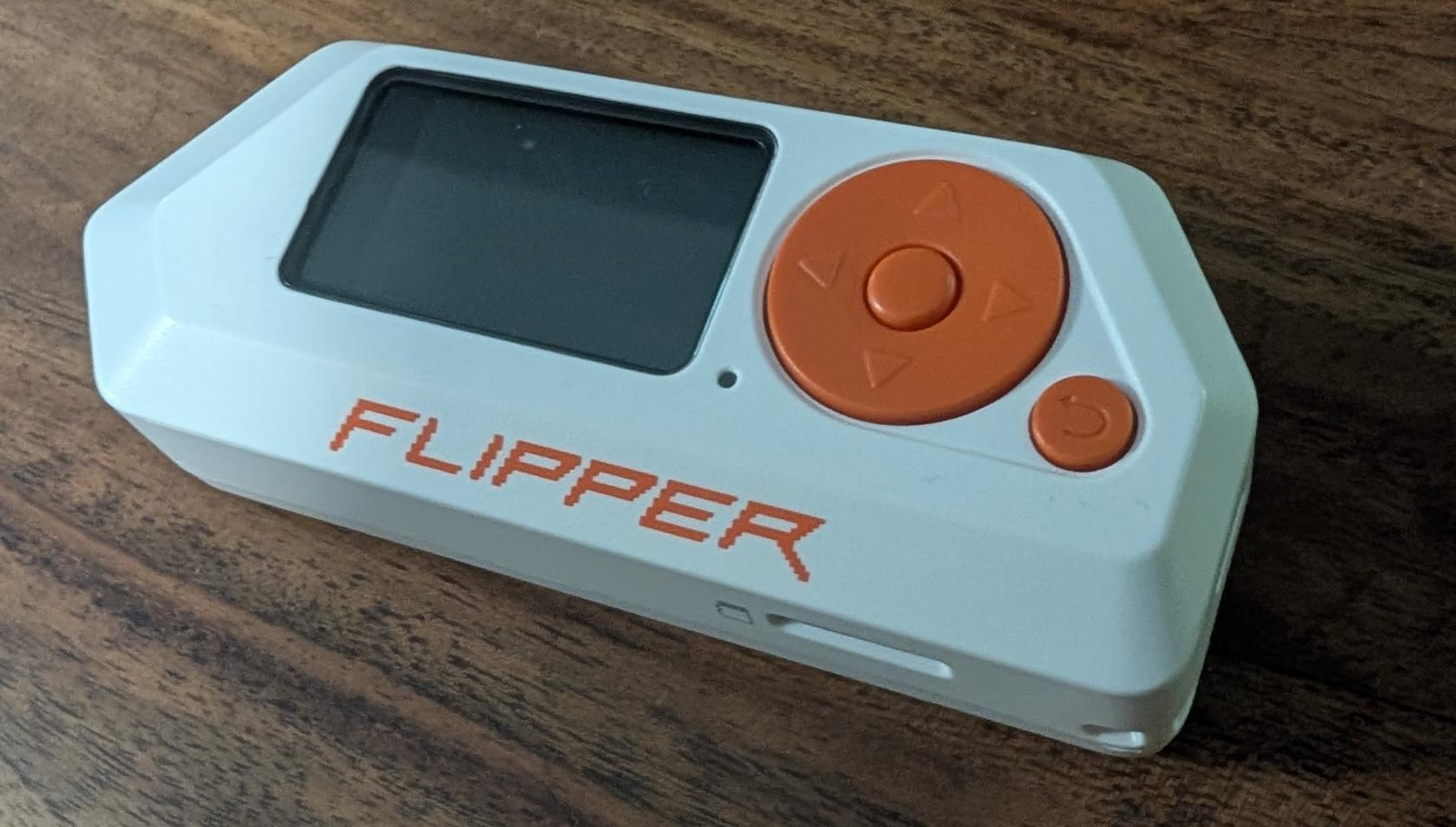](https://wiki.drheck.dev/uploads/images/gallery/2026-08/flipper.jpeg)
Most wireless AC outlet relays use **Amplitude Shift Keying / On-Off Keying (ASK/OOK)** fixed-code ICs (e.g. `Princeton PT2262`, `SC5262`, `EV1527`, or `Holtek`):
1. **Protocol Capture**:
* Open **Sub-GHz → Read** on Flipper Zero.
* Transmit from factory remote: Flipper identifies frequency (433.92 MHz), bit length (e.g. 24-bit / 33-bit), hex payload, and pulse duration (e.g. ~291 µs).
2. **Raw Signal Capture (Fallback)**:
* Open **Sub-GHz → Read RAW** at `433.92 MHz` (Modulation: `AM650`).
* Record demodulated 433.92 MHz ASK/OOK pulses into raw `.sub` files.
3. **Validation via Replay**:
* Replaying `.sub` files directly from Flipper Zero reliably triggered physical relays, confirming that recorded pulse sequences were valid.
4. **Pulse-Interval Extraction**:
* High pulse ≈ 874 µs, Low pulse ≈ 291 µs for bit `'1'`
* High pulse ≈ 291 µs, Low pulse ≈ 874 µs for bit `'0'`
* Trailing sync gap ≈ 291 µs High, 10,190 µs Low (~10.2 ms)
* Fundamental clock tick: **Te = 291.27 µs** (3433.22 baud)
5. **Isolating the Transceiver Issue**: Because Flipper Zero replay worked consistently while initial YARD Stick One transmissions failed, we confirmed the payload bitstreams were correct, isolating the root cause to the CC1111 reference crystal configuration.
### Crystal Oscillator Frequency (24.0 MHz vs 26.0 MHz)
The most elusive obstacle was the RF carrier frequency register calculation:
* **The Assumption**: Standard Texas Instruments CC1101 transceiver chips commonly use a **26.0 MHz** reference crystal. Using the standard TI datasheet formula with a 26 MHz clock calculated the frequency control word as `FREQ = 0x10B071` for 433.92 MHz:
* `FREQ = (433,920,000 / 26,000,000) × 2^16 = 1,093,745 = 0x10B071`
* **The Reality**: The **CC1111 USB SoC** on the YARD Stick One does *not* use a 26 MHz crystal. Because USB 2.0 Full-Speed requires a 48 MHz clock derived from a 2x PLL, the CC1111 utilizes a **24.0 MHz reference crystal** (`f_XOSC = 24.0 MHz`).
* **The Consequence**: When `0x10B071` was loaded into a 24 MHz CC1111, the actual emitted RF carrier was:
* `Actual Frequency = (1,093,745 × 24,000,000) / 2^16 = 400.54 MHz`
The transceiver was broadcasting over **33 MHz off-target**, resulting in zero signal reaching the 433.92 MHz receivers.
* **The Fix**: Calibrating for the true 24.0 MHz crystal yielded the exact frequency registers:
* `FREQ = (433,920,000 / 24,000,000) × 2^16 = 1,184,883 = 0x121473`
* `FREQ2 = 0x12`, `FREQ1 = 0x14`, `FREQ0 = 0x73` (with Channel `CHANNR = 0x00`).
### Pulse Framing & Sync Gap Correction
From Flipper Zero capture analysis:
* **Bit `0`**: 1 tick High, 3 ticks Low (`1000` -> 291 µs High, 874 µs Low)
* **Bit `1`**: 3 ticks High, 1 tick Low (`1110` -> 874 µs High, 291 µs Low)
* **Sync Gap**: 1 tick High, 35 ticks Low (`1` + 35 zeros -> 291 µs High, 10.19 ms Low)
**The Framing Bug**: Initial synthetic generators placed a sync pulse at the *beginning* of the frame and another sync pulse at the *end*. When repeating frames in a burst, this created two back-to-back sync gaps (>21 ms of dead carrier), which caused the relay microcontroller's state machine to timeout and drop the frame.
**The Fix**: A frame consists strictly of the **33 data bits followed by a single trailing sync gap**:
* **Frame Composition** = (33 × 4) + 36 = 168 ticks = **21 bytes** (48.93 ms)
### Multi-Frame Contiguous Streaming vs Single-Shot Bursts
Consumer 433 MHz ASK/OOK receivers use simple superheterodyne/regenerative circuits with slow Automatic Gain Control (AGC). Single-shot transmissions or frames separated by USB packet latency fail because the receiver AGC cannot settle in time.
**The Fix**: In the `studio-power` script, the 21-byte frame is multiplied into a **continuous 630-byte stream** (30 consecutive frames) transmitted in a single uninterrupted RF burst:
* **Burst Duration** = (630 bytes × 8 bits) / 3433.22 baud = **1.468 seconds**
This ensures the receiver AGC locks on and decodes the command reliably.
---
## 5. Protocol Specification (Princeton / Fosmon 33-Bit PWM)
### Timing & Waveform Structure
* **Fundamental Clock Tick Period (Te)**: 291.27 µs (3433.22 baud)
* **Bit Symbol `0`**: 1 tick High (291 µs), 3 ticks Low (874 µs) -> `1000`
* **Bit Symbol `1`**: 3 ticks High (874 µs), 1 tick Low (291 µs) -> `1110`
* **Trailing Sync Pulse**: 1 tick High (291 µs), 35 ticks Low (10.19 ms) -> `1` + 35 zeros
```text
Bit '0': +---+
| |___________________ (1 tick high, 3 ticks low)
<------ 3Te ------->
Bit '1': +---------------+
| |_______ (3 ticks high, 1 tick low)
<----- 3Te ----><--Te-->
Sync: +---+
| |____________________________________________________ (1 tick high, 35 ticks low)
<---------------------- 35Te ----------------------->
```
---
## 6. CC1111 Hardware Register Map & RfCat USB Protocol
The standalone native C driver (`yard_tx.c` / `cc1111_rfcat.h`) controls the transceiver directly using `libusb-1.0` control transfers and bulk endpoints:
### RfCat USB Vendor Requests (`bmRequestType = 0x40`)
* `0x00` (`RFCAT_REQ_PING`): Verifies firmware communication.
* `0x01` (`RFCAT_REQ_STROBE`): Dispatches CC1111 radio command strobes (`0x01` = `STX`, `0x04` = `SIDLE`).
* `0x03` (`RFCAT_REQ_PEEK`): Reads memory-mapped SFR / XDATA registers.
* `0x04` (`RFCAT_REQ_POKE`): Writes memory-mapped SFR / XDATA registers.
* `0x10` (`RFCAT_REQ_SET_AMP_MODE`): Toggles Skyworks SE2431L Power Amplifier (`1` = ON, `0` = Bypass).
* `EP 0x04` (`RFCAT_EP_BULK_OUT`): High-speed USB Bulk OUT endpoint for streaming OOK baseband byte frames directly to the CC1111 TX FIFO.
### Calibrated CC1111 Transceiver Register Map
| Register Name | XDATA Address | Config Value | Register Function & Mathematical Derivation |
| :--- | :--- | :--- | :--- |
| `FREQ2` | `0xDF09` | `0x12` | Frequency Synthesizer MSB: `FREQ = (433,920,000 / 24,000,000) × 2^16 = 0x121473` |
| `FREQ1` | `0xDF0A` | `0x14` | Frequency Synthesizer Middle Byte |
| `FREQ0` | `0xDF0B` | `0x73` | Frequency Synthesizer LSB |
| `CHANNR` | `0xDF0C` | `0x00` | Base RF channel index (0) |
| `MDMCFG4` | `0xDF10` | `0x08` | Filter bandwidth (187.5 kHz) & Data Rate Exponent (`DRATE-E = 8`) |
| `MDMCFG3` | `0xDF11` | `0x84` | Data Rate Mantissa (`DRATE-M = 132`): `Baud = ((256 + 132) × 2^8 / 2^28) × 24 MHz = 3433.22 baud` |
| `MDMCFG2` | `0xDF12` | `0x30` | Modulation format: ASK/OOK (`0x30`), preamble/sync word disabled |
| `MDMCFG1` | `0xDF13` | `0x00` | Zero extra preamble bytes |
| `MDMCFG0` | `0xDF14` | `0xF8` | Channel spacing exponent |
| `FREND0` | `0xDF17` | `0x01` | Sets PA output power level index 1 for bit symbol 1 |
| `MCSM0` | `0xDF18` | `0x18` | Automatic synthesizer calibration on IDLE-to-TX transition |
| `PA_TABLE1`| `0xDF2F` | `0xC0` | Maximum RF output power (+10 dBm base, +20 dBm via SE2431L amplifier) |
| `PA_TABLE0`| `0xDF2E` | `0x00` | Carrier cut-off for OOK Low level |
| `PKTCTRL0`| `0xDF08` | `0x00` | Fixed packet length mode |
| `RFST` | `0xDF36` | `0x01` | Radio Command Strobe: `STX` (Start Transmission) |
---
## 7. Studio Device Payload Database
Every studio outlet has a dedicated 33-bit code for **ON** and **OFF**:
| Device Key | Device Name | 33-Bit Binary Bitstream (ON / OFF) | Hex Payload (ON / OFF) |
| :--- | :--- | :--- | :--- |
| `mrc` | **Moroccan Lamp** | `110100001100000100001011011110100` (ON)
`110100001100000100001010011110110` (OFF) | `0x1a18216f4`
`0x1a18214f6` |
| `rack` | **Recording Rack** | `001011011010100100001011100110000` (ON)
`001011011010100100001010100110010` (OFF) | `0x5b521730`
`0x5b521532` |
| `computer` | **Studio Computer** | `001011011010100100001101100111110` (ON)
`001011011010100100001100100111100` (OFF) | `0x5b521b3e`
`0x5b52193c` |
| `sub` | **Subwoofer** | `010110100111010000001101000111000` (ON)
`010110100111010000001100000111010` (OFF) | `0xb4e81a38`
`0xb4e8183a` |
| `pa` | **Main PA Speakers** | `010110100111010000001011000110100` (ON)
`010110100111010000001010000110110` (OFF) | `0xb4e81634`
`0xb4e81436` |
| `tv` | **TV Monitor** | `010110100111010000001111000111100` (ON)
`010110100111010000001110000111110` (OFF) | `0xb4e81e3c`
`0xb4e81c3e` |
| `neewer` | **Neewer LED Panels** | `001010010110011000001111010101110` (ON)
`001010010110011000001110010101100` (OFF) | `0x52cc1eae`
`0x52cc1cac` |
---
## 8. Authentik & Mobile 1-Tap Trigger
To control the studio securely from any phone or device on the LAN/WAN:
1. **Reverse Proxy & Forward Auth**:
* Nginx on `ul` forwards `https://studio.drheck.dev/api/power` through Authentik forward-auth.
2. **PiKVM Local Webhook**:
* When authorized, the proxy issues an API call to a lightweight Python webhook running on `pikvm-studio`.
3. **Mobile Launcher Shortcuts**:
* **iOS**: In the **Shortcuts** app, create an action: *Get contents of URL* `POST https://studio.drheck.dev/api/power/on`.
* **Android**: Configure a launcher widget using the **HTTP Shortcuts** app.
* **Siri / Voice**: Trigger via *"Hey Siri, turn on recording studio"*.
---
## 9. Signal Synthesis Implementation (Python)
To generate and transmit any command from scratch using `rflib`:
```python
#!/usr/bin/env python3
import sys, time
import rflib
def encode_pwm_exact(bit_string):
"""Converts a 33-bit code into an exact 21-byte OOK frame at 3433 baud."""
raw = ""
for bit in bit_string:
if bit == '1':
raw += "1110" # 3 ticks high, 1 tick low
elif bit == '0':
raw += "1000" # 1 tick high, 3 ticks low
# Append trailing sync pulse: 1 tick high, 35 ticks low (~10.2 ms)
raw += "1" + ("0" * 35)
while len(raw) % 8 != 0:
raw += "0"
return bytes(int(raw[i:i+8], 2) for i in range(0, len(raw), 8))
def send_power_signal(bit_string, repeats=30):
payload = encode_pwm_exact(bit_string)
d = rflib.RfCat()
d.setFreq(433920000)
d.setMdmModulation(rflib.MOD_ASK_OOK)
d.setMdmDRate(3433)
d.setMdmSyncMode(0)
d.setMaxPower()
d.setAmpMode(1) # Enable hardware RF power amplifier
d.RFxmit(payload * repeats)
d.cleanup()
# Example: Turn ON Moroccan Lamp
send_power_signal("110100001100000100001011011110100", repeats=30)
```
---
## 10. CLI Tool: `studio-power`
The utility is permanently installed on `pikvm-studio` at `/usr/local/bin/studio-power`.
### Command Syntax
```shell
# Toggle individual devices:
$ sudo studio-power mrc on
$ sudo studio-power mrc off
$ sudo studio-power rack on
$ sudo studio-power rack off
$ sudo studio-power computer on
$ sudo studio-power computer off
$ sudo studio-power sub on
$ sudo studio-power sub off
$ sudo studio-power pa on
$ sudo studio-power pa off
$ sudo studio-power tv on
$ sudo studio-power tv off
$ sudo studio-power neewer on
$ sudo studio-power neewer off
# Session management (turn entire studio on or off):
$ sudo studio-power all on
$ sudo studio-power all off
# List devices:
$ studio-power list
```
---
## 11. External References & FCC Certification Links
* **Git Repository**: [https://git.drheck.dev/luke/studio_yardstick](https://git.drheck.dev/luke/studio_yardstick)
* **Fosmon Hardware & FCC Filings**:
* [Fosmon Wireless Remote Control Transmitter (FCC ID: 2A3BM5782988)](https://fccid.io/2A3BM5782988)
* [Fosmon Inc. FCC Grantee Directory (Grantee Code: 2A3BM)](https://fccid.io/company/Fosmon-Inc)
* [FCC Equipment Authorization System (EAS) Search](https://apps.fcc.gov/oetcf/eas/reports/GenericSearch.cfm)
* **Transceiver Hardware & Firmware**:
* [Great Scott Gadgets YARD Stick One Product Portal](https://greatscottgadgets.com/yardstickone/)
* [YARD Stick One Hardware Schematics & Design Files (GitHub)](https://github.com/greatscottgadgets/yardstickone)
* [Texas Instruments CC1111F32 Sub-1 GHz SoC Datasheet](https://www.ti.com/product/CC1111F32)